
Ola Landqvist
Head of business development, Building Systems, Sweden
30 Oct 2026
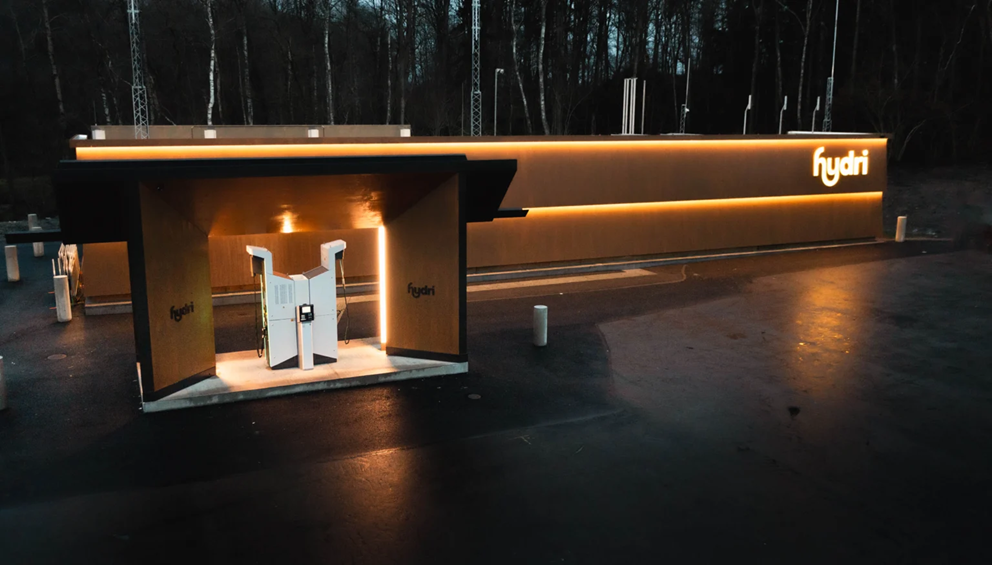
When Olsson Lyckefors Architects developed the concept for Hydri’s hydrogen refuelling stations, evaluations showed that CLT could meet the project’s safety requirements and functional needs while supporting the ambition to create a distinctive architectural identity. The result is an expressive timber concept for the energy infrastructure of the future.
When Olsson Lyckefors Architects was commissioned to develop a concept for Hydri’s hydrogen refuelling stations, the task involved much more than designing a technical facility. The stations needed to meet stringent safety requirements while also reflecting the client’s approach to sustainability and the energy solutions of the future. For the architects, safety was not something to be addressed later in the process, but a natural starting point from the very beginning.
“There were several important considerations in the design process. With Hydri, we were introducing something new into the public realm, something that in other contexts has been enclosed in industrial materials with a relatively utilitarian appearance. It was very important that this new approach should focus on people, bringing warmth and a connection to natural, circular materials. With timber, we were able to create something that feels both new and welcoming,” says Andreas Lyckefors, architect at Olsson Lyckefors Architects.
Early in the project, several different materials and structural solutions were explored, including steel, concrete, sandwich panels and cross-laminated timber (CLT). The materials were compared from several perspectives, including structural strength, fire safety, climate impact, potential for reuse, and their influence on the appearance and character of the facility.
Safety was, of course, a key consideration, as hydrogen is an explosive substance. The evaluation therefore also examined how the different materials perform under extreme loads and how they could contribute to creating a safe and robust facility.
The comparison showed that CLT could combine several of the qualities required for the project: safety, structural performance, prefabrication, resource efficiency and a distinctive architectural expression. This made the material well suited to the concept behind Hydri’s hydrogen refuelling stations.
“It is particularly exciting when we find new applications for CLT, and this is certainly not one we had initially imagined. The project demonstrates the strong symbolic value that renewable materials can have for companies looking to drive sustainable innovation. Andreas and the team at Olsson Lyckefors, together with Hydri, have done a fantastic job developing the concept,” says Ola Landqvist, Business Developer at Södra.
Hydri’s hydrogen refuelling stations demonstrate what can happen when architecture, material expertise and industrial production work together from the outset. The safety requirements have not only influenced the construction but have also helped shape the architecture. In the same way, the CLT serves becomes an important part of the station’s identity.
The result is a concept where renewable forest raw material meets the energy solutions of the future, at ten hydrogen refuelling stations across Sweden. The project also demonstrates how timber can be used in entirely new contexts, opening further possibilities as tomorrow’s energy systems are developed.
our building systems
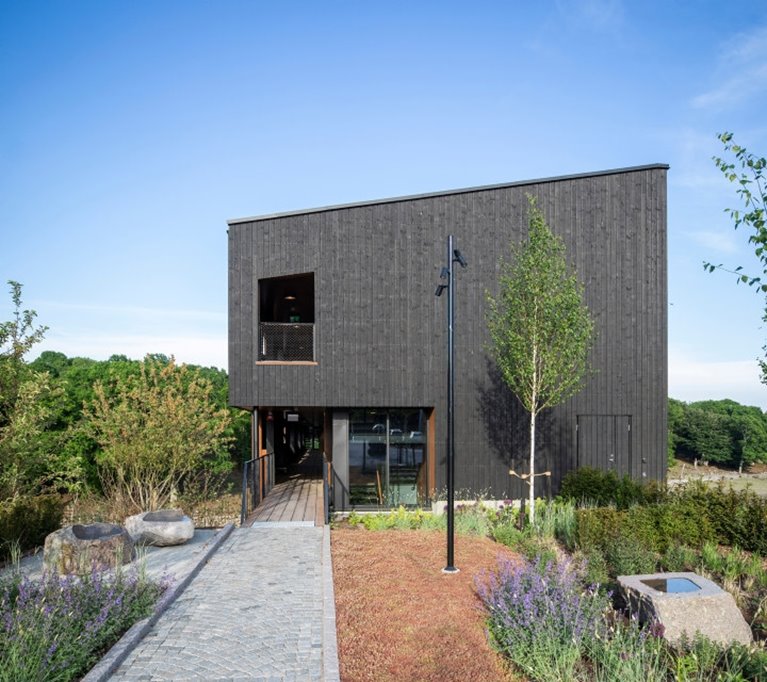
We offer wood frames, facades, and interior cladding. Together, they provide the opportunity to create unique buildings with wood from the inside out.
Head of business development, Building Systems, Sweden
Market manager, Building Systems, Denmark
Sales Representative, Building systems
Export sales, Building Systems