
Ola Landqvist
Business Developer, Building Systems, Sweden
Timber is a flexible material that is sustainable and robust, while allowing buildings to breathe and age beautifully. Timber creates great opportunities for innovation while taking us back to traditional building methods. By choosing CLT as the structural material, you gain access to a construction technique that offers numerous benefits for design, construction and sustainability.
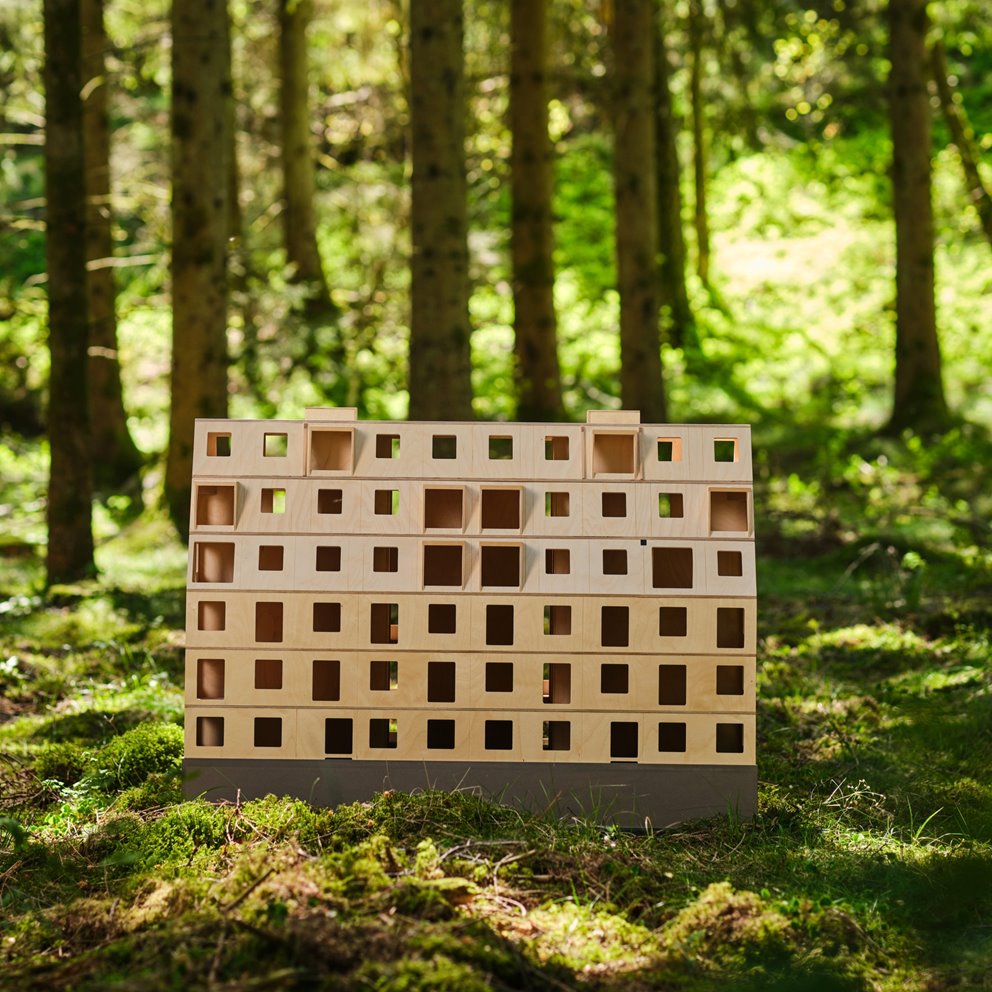

CLT works perfectly for both external and internal walls and can be combined with other materials in similar types of structures. By understanding the different options and their properties, you can optimise wall design to meet specific requirements for sound insulation, fire protection and climate performance.
Timber is the only renewable building material that can be used for large-scale, high-rise construction. With the help of sunlight, carbon dioxide and water, forests produce renewable timber. When trees are harvested and used for timber products, these products continue to store carbon throughout their entire lifespan – for example, in buildings.
CLT is a lightweight building material that enables creativity when it comes to extensions. Elements can also be dismantled and reassembled in a new location, opening great opportunities for reuse. To fully benefit from CLT’s advantages, it is important to consider the material’s properties already in the sketch phase. Ola Landqvist, Business Developer at Södra, has extensive experience in planning and developing CLT buildings. We asked Ola to answer the most common questions that arise during the design phase of a project.
How should you plan for CLT slabs?
- CLT is an excellent choice for slabs. To ensure sufficient strength and stability, it is crucial to select the right dimensions. Span width is particularly important for slabs, and there is a sweet spot around 5.5 metres when building residential properties in CLT. A span width beyond that is possible, but less optimal, says Ola.
Which complementary materials are needed when constructing walls in CLT?
- CLT works perfectly for both external and internal walls and can be combined with other materials in similar types of structures. By understanding the different options and their properties, you can optimise wall design to meet specific requirements for sound insulation, fire protection and climate performance. It is important to find the best complementary materials to create a high-quality building component, says Ola.
What does material optimisation look like in CLT construction?
- By working with the design of, for example, apartment layouts, you can design in harmony with the material’s properties. Non-load-bearing walls can be built with traditional stud framing to reduce costs and environmental impact. It is important to use the right material in the right place. For example, it may be advantageous to consider how CLT is used most effectively in buildings with many openings in the external walls, says Ola.
Architectural guide for CLT buildings
Our guide provides architects and clients with information on how to maximise the potential of Södra’s CLT. We offer solutions for choosing slabs and walls, as well as information on fire, moisture, acoustics, material optimisation and dismantling. These building components are starting points and principles that can then be optimised for each unique project.
Build sustainably in timber
We find timber exciting with all its architectural possibilities, and we would love to build timber buildings together with you. By timber buildings, we mean a structure with a solid timber frame – both public properties and residential buildings. Timber is versatile and suitable for structural frames, facades and interiors. In a building project, our contribution is often most valuable early in the process. We are happy to share our knowledge of timber and describe the material’s possibilities and limitations. We can also identify areas where resources can be saved by making minor changes. Our support also ensures that you work from the outset with ideas that are practically workable.
Contact us to discuss how we can help you integrate CLT into your next project.

Our architect’s guide is primarily aimed at architects or clients planning a CLT project. The guide provides information on what you should consider to maximise the potential of Södra’s CLT.
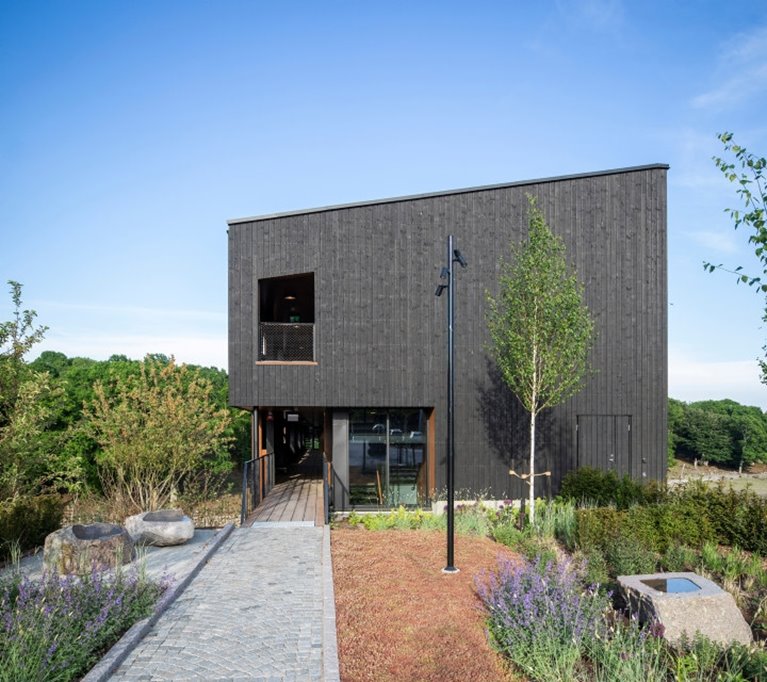
our building systems
We offer wood frames, facades, and interior cladding. Together, they provide the opportunity to create unique and sustainable buildings that breathe the forest from the inside out.
Business Developer, Building Systems, Sweden

Business Developer, Building Systems, Denmark

Sales Representative, Building systems
Use the search bar in the top menu or go to our contact page to find the right contact person

Södra is Sweden’s largest forest owners’ association and an international forest industry group, where the operations refine the members’ forest raw material.
Södra is Sweden’s largest forest owners’ association and an international forest industry group, where the operations refine the members’ forest raw material.